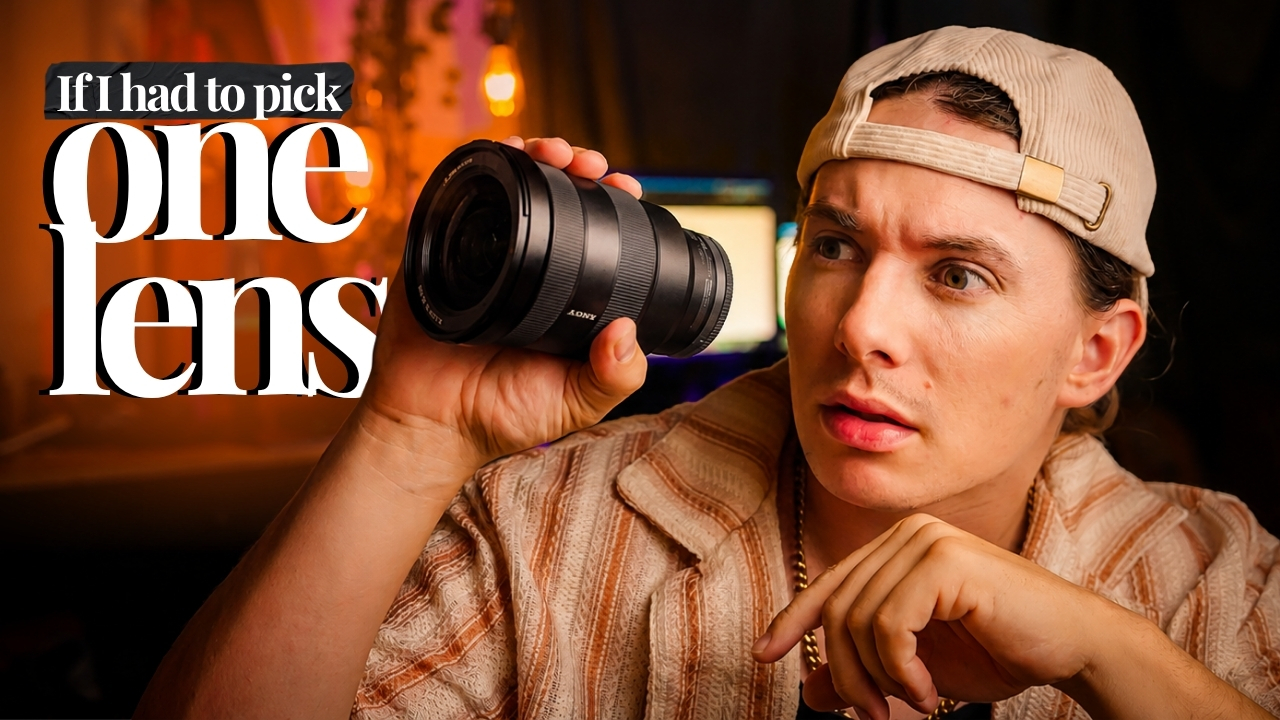
If I could only buy one lens for both real estate photography and video, it would be the Sony 16–35mm f/2.8 G Master.
It is not the widest lens I own, it does not have the most reach, and it is definitely not cheap. But it may be the only lens capable of photographing an entire property and shooting a complete real estate video without ever coming off the camera.
That does not mean it is perfect for every shot. In an ideal world, I want several lenses that cover everything from ultra-wide interiors to compressed exterior views. But most photographers do not begin with an ideal kit.
If you are buying your first serious lens, or you simply want one dependable option that can stay on the camera all day, the 16–35mm makes a strong case for itself.
Why I Put the 16–35mm Back in My Kit
I had not used my original 16–35mm consistently in about five years. Its autofocus broke, and the lens spent more time collecting dust than making images.
When another camera needed repair, I sent both pieces of equipment to Sony. The lens came back replaced, giving me a chance to approach it almost like a new piece of gear.
Instead of reviewing it from behind a desk, I took it to an actual listing. I photographed the property, shot video, and tried to determine whether the lens could realistically handle the entire assignment by itself.
That is the test that matters: not whether a lens produces one beautiful isolated frame, but whether it can keep up through bedrooms, bathrooms, exteriors, details, and moving video shots.
Why the 16–35mm Range Works So Well
16mm Handles Most Interior Spaces
At 16mm, the lens is wide enough for the majority of real estate interiors.
I own a 12–24mm f/4, and there are times when 12mm is useful, especially in extremely tight bathrooms or when an agent specifically wants the ultra-wide look. But wider is not automatically better.
Once a room is stretched too far, furniture and walls begin to look unnatural, and the photography can misrepresent the space.
For my taste, 16mm is a practical starting point. It shows enough of the room to communicate the layout without immediately making the image feel exaggerated. For many homes, it can cover nearly every required interior angle.
20mm to 24mm Creates a More Natural Perspective
The ability to zoom beyond 16mm is what makes this lens more versatile than a dedicated ultra-wide option.
Interior-design and editorial work often looks better around 20mm or 24mm, where the room feels more intentional and less stretched. Many exterior photographs also look excellent at 24mm because the property retains its proportions while still fitting comfortably in the frame.
35mm Covers Details and Compressed Shots
At 35mm, the lens stops feeling ultra-wide and begins to function like a detail lens.
It cannot completely replace a 50mm or a telephoto zoom, but it gives you enough compression for finishes, fixtures, styled moments, and tighter video shots.
That extra reach is a major reason the 16–35mm can stay on the camera for an entire listing.
One Lens for Both Photography and Video
Real estate photographers increasingly need to deliver more than still images.
A single appointment may include photography, horizontal video, vertical social content, detail shots, and agent branding. Constantly changing lenses slows the shoot down and creates more opportunities for dust, missed moments, and inconsistent framing.
For video, 16mm covers wide establishing shots and room movements, while 35mm handles the details. The focal lengths in between let you adjust the perspective without physically rebuilding every shot.
That flexibility is especially valuable when you are working quickly or moving through an occupied property.
Do You Really Need f/2.8?
For standard real estate photography, probably not.
I often photograph interiors around f/9 or f/10, so the wider aperture is not the main reason to buy this lens. A 16–35mm f/4 can be a smarter starting point if you need to control the cost.
The f/2.8 aperture becomes more useful for video, low-light work, agent content, and detail shots where you want a softer background. It gives the lens another creative mode without taking away its ability to function as a practical workhorse.
Whether that advantage is worth the price depends on the type of work you plan to sell.
Where the Lens Falls Short
The 16–35mm will not be the best lens for every individual shot.
It cannot match 12mm when a bathroom is unusually tight, and 35mm cannot create the same compression as a 50mm or 70–200mm. If a property has an important distant view, a longer lens may present it far better.
The G Master is also a serious investment, especially for someone still building a business.
Those limitations are why I would not choose to own only one lens forever. My broader kit includes a 12–24mm f/4, a 24–70mm f/2.8, and a 50mm. I am also interested in adding a 70–200mm for exterior views and more compressed compositions.
Specialized lenses will always outperform a general-purpose lens in specific situations.
The Best Alternatives
If the 16–35mm f/2.8 is outside your budget, the f/4 version can cover the same essential focal range for less money. You may not need the wider aperture when you are starting.
If your priority is making every interior look as wide as possible, a 12–24mm may fit your business better, although you will give up the 24–35mm range that makes detail work easier.
The right decision depends on the work you want to produce.
Photographers focused on high-volume listing coverage may value maximum width. Photographers aiming for a more editorial style—or those who need to deliver both photography and video—may get more value from the flexibility of the 16–35mm.
Final Verdict: Is It the Only Lens You Need?
If I could choose only one lens to begin shooting real estate photography and video, I would choose the Sony 16–35mm f/2.8 G Master.
It gives you the width required for interiors, the natural perspective needed for exteriors, enough reach for details, and the aperture flexibility to produce polished video.
It will not deliver the absolute best result in every situation, but it gives you everything required to complete the job.
That is the real value of this lens. You can arrive at a property with one camera, one lens, and the confidence that you can photograph and film the entire listing.
As your business grows, you can add specialized lenses around it. But if you need one piece of glass that can carry the workload from the beginning, the 16–35mm is difficult to beat.
What lens stays on your camera the most? If you already use the 16–35mm, I would love to know whether it has become your all-day real estate lens.


- I Gave This House the Full Luxury Marketing Treatment - October 14, 2026
- My Top 3 Hacks for Real Estate Video Editing - September 19, 2026
- The Best Lens for BOTH Real Estate Photo & Video - September 2, 2026